
Treating OCD and Eating Disorders: What Clinicians, Clients, and Families, Need to Know
August 28, 2025
Specialist or Generalist? How to Find the Right Therapist in Seacoast NH
September 24, 2025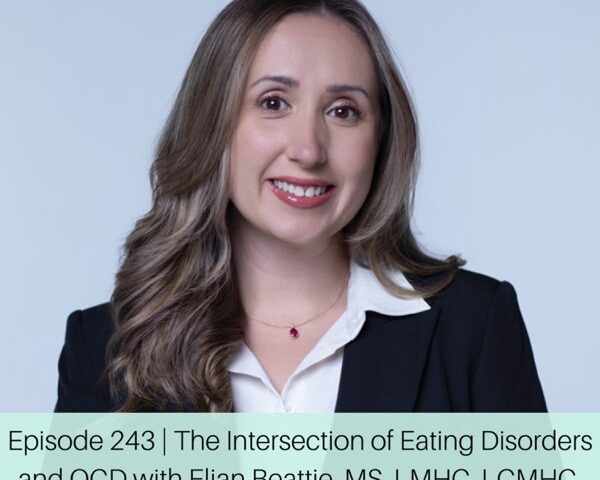
In today’s episode of Psych Talk I chat with Elian Beattie, LMHC, LCMHC about the intersection between eating disorders and obsessive compulsive disorder (OCD). We start the episode by defining various eating disorders, as well as what OCD is (and is not). Elian discusses the intersection between eating disorders and OCD and why the two disorders have such high co-morbidity. She discusses some common symptoms and behaviors seen in both eating disorders and OCD, as well as how both reinforce and contribute to the maintenance of one another. Elian also discusses how one can tell if certain behaviors are driven by OCD versus and eating disorder, and describes various treatment for treating co-morbid OCD and eating disorders.
FAQs: Intersection of Eating Disorders and OCD
Yes. Eating disorders and obsessive-compulsive disorder (OCD) frequently co-occur, meaning someone can meet criteria for both at the same time. When they overlap, symptoms often reinforce each other and can make recovery more complex without integrated treatment.
It means certain thoughts and behaviors can look similar across both conditions—like rigid rules, fear-based rituals, reassurance-seeking, checking, or avoidance—and they can maintain each other over time (for example, anxiety → ritual → short-term relief → stronger anxiety cycle).
Both can involve intrusive thoughts, high anxiety, rigid rules, perfectionism, and ritualized behaviors (mental or physical). The overlap can make it hard to “white-knuckle” change because the behaviors are reinforced by anxiety relief.
Often, yes. If OCD rituals or obsessions are fueling food- or body-related behaviors (or if eating-disorder behaviors are functioning like compulsions), treating only one side may leave the other cycle intact—so symptoms can persist or shift form.